
New Law on Cheques
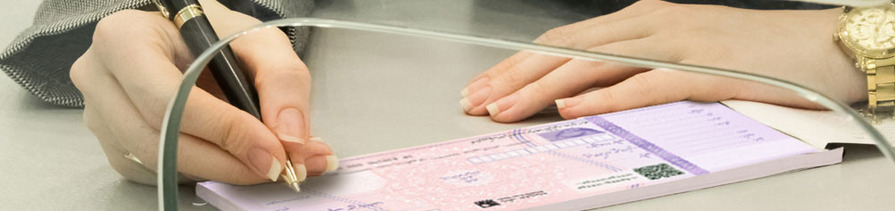
From the beginning of the year 1400 (starting March 21, 2021), the cheque booklets are printed in new design and replaced the previous “Sayad” ones. The purple color of the cheque leaves and the unique 16-digit code printed on the face of the cheque leaves, distinguishes them from the previous ones and are all governed by the New cheque Act. Therefore, to cash the cheques, it is required for the drawer to register the cheque features (including maturity date, amount and payee/ beneficiary’s identification information) at the time of issuance by the Issuer, and confirmation of the same by the payee, at the time of issuing the cheque, on the “Sayad” online system.
These cheques cannot be made to the order of bearer and signing over of which (transferring to third person) needs to be registered on Sayad system. By enforcement of the Act, the creditworthiness of the cheque will not merely rely on the paper cheque leaf and backups and registration of which on the CBI integrated system enhances its trustworthiness. Enforcement of the Act mitigates crimes such as forgery or theft of the cheques to a significant extent on one side and on the other side, requirement to register the cheque information on the Central Bank’s Sayad System makes it possible for the CBI to exercise constant online supervision on high-risk persons and also deprives bad debtors and fraudsters from having cheque booklets, since inquiry about history, obtaining list of prohibited items of the cheque book holder and issuance of cheque books are carried out in a centralized manner by CBI, based on credit rating/scores.
- Noticeable features of new cheque leaves,
- Requirements of new cheques,
- A synopsis of legal requirements of new cheques,
- Access tools to Sayad system for registration, confirmation and transfer of the cheque,
- Procedures concerning cheque processing on Sayad system
- Making inquiry about the status of cheque writer’s creditworthiness/credit rating,
- The features of the new cheques,
- The restrictions placed on cheque writers with dishonored cheques,
- The procedure to eliminate the bad record of dishonored cheque,
- Following up and encashment/collection of dishonored cheque,
- Determining/deciding on the status of existing cheques,
Noticeable features of new cheque leaves
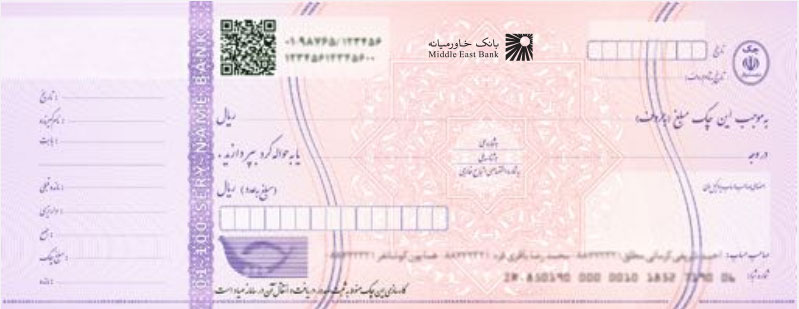
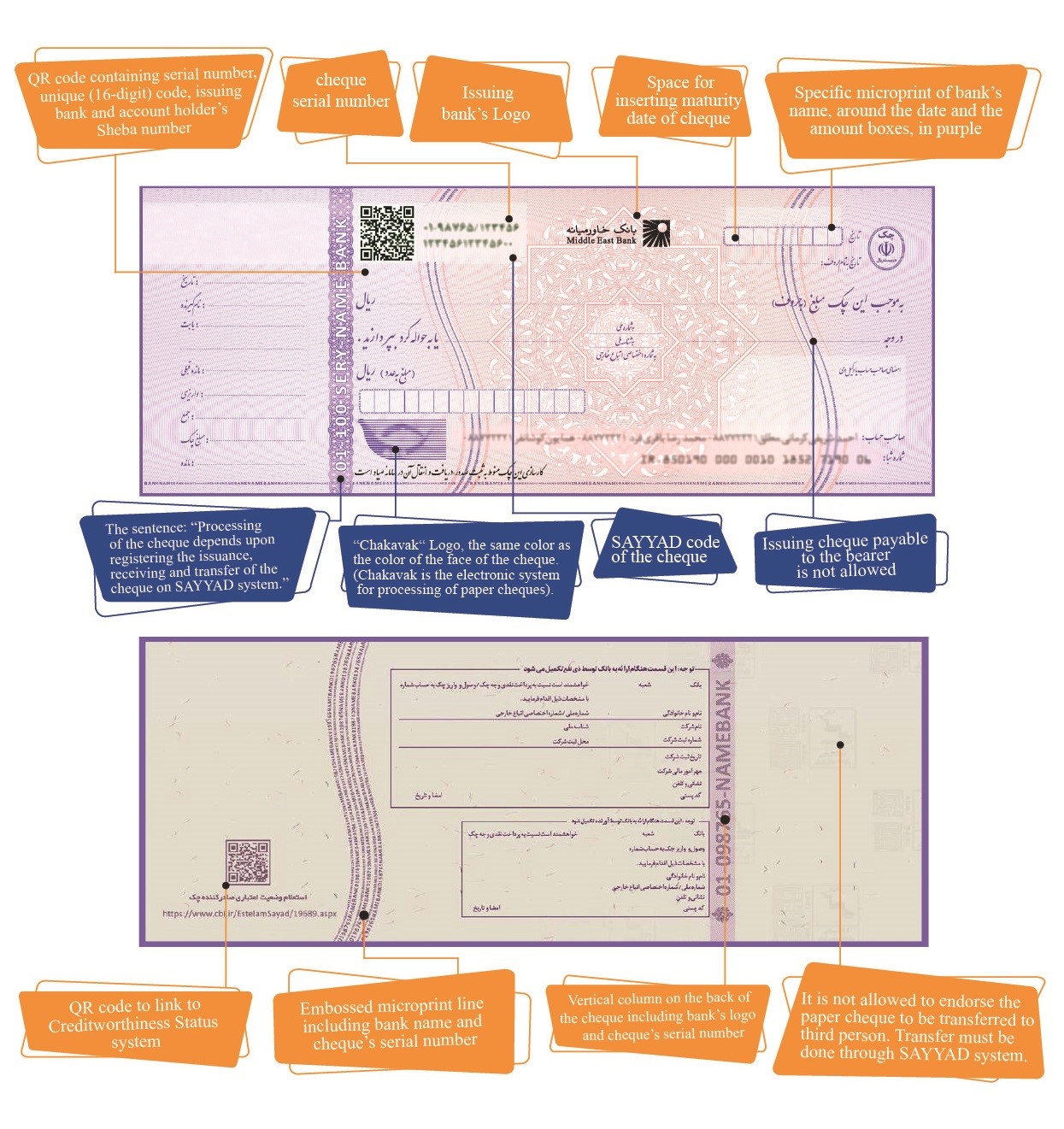
- The cheque leaves come in purple color,
- The sixteen-digit unique code can be seen on the top left corner of each new cheque leaf. The QR code is also printed on each cheque leaf,
- The sentence “Processing/encashment of the cheque depends upon registering the issuance, receiving and transfer of the cheque on Sayad system.” Is pre-printed on the cheque leaves,
Requirements of new cheques
Writing cheques payable to the bearer is prohibited and the issuers are required to write the cheques only to the order of specified payees (natural or legal persons) while the recipients of cheque shouldn’t accept bearer cheques. The new cheques, which are issued according to article 6 of the Law on Modifying cheque (issuance) Act, can be registered on Sayad system, enabling the issuers to register the particulars of the payee/beneficiary, amount and date of the cheque on Sayad system using the bank’s payment gateways/websites or mobile applications which are active in the country’s payment network. Recipients of new cheques, too, can make inquiry about, and confirm, the status of the issued cheques, using active bank’s payment gateways/websites or mobile applications. It is also possible to transfer (sign over) the cheque through Sayad system. So, if the payee, after approving the details of the cheque, is willing to transfer the cheque to another (third) person, he/she may use the facility available on the System by entering the particulars ((legal entity’s) national ID code or (Individual person’s) National Code) of the new beneficiary.
A synopsis of legal requirements of new cheques
- Requirement to register all new cheques on Sayad system at the time of registration, confirmation and transfer,
- Prohibition against issuing new cheques and registering the same on Sayad system by the issuing person, as far as the dishonored cheques are not cleared.
- Requirement to write the cheque to the order of specific person and prohibition on making cheques payable to the bearer.
- Endorsing the new cheques, to be transferred to third persons, can only be made through registering on Sayad system.
Access tools to Sayad system for registration, confirmation and transfer of the cheque
Internet Banking
Middle East Bank Internet Banking provides its distinguished customers with access to online banking services, including registration, confirmation and transfer of cheques through Sayad system. To use Middle East Bank Internet Banking, you should visit a branch, receive your username and login password and enter the Middle East Bank’s website at www.middleeastbank.ir and choose Internet banking icon to log in to the system.
Mobile Banking
Mobile Banking is an electronic banking service offered by the Middle East Bank. This facility enables you to carry out many of your banking operations, such as registration, confirmation, transfer and issuer or receiver inquiry of cheques through Sayad system, without any time constraints, using your cell phone.
ATM (Automated Teller Machines)
Using Middle East Bank’s ATMs and having a cash card, it would be possible to register, confirm and transfer the Sayad checks.
Mobile Payment Apps
Visit the agent bank’s branches
In order to register the cheque, the issuer may only refer to the bank which issued the cheque booklet for him/her. When receiving the confirmation, the confirmer (beneficiary/ recipient) too, can visit his bank and then the confirmation procedure is carried out by the bank, on their behalf.
Procedures concerning cheque processing on Sayad system
The cheque issuer, having issued the paper cheque, must register the cheque information, including: date, amount and identity of beneficiary, written on the cheque leaf, using access tools to Sayad system.
The recipient/beneficiary should receive the paper cheque and, using Sayad system access tools, inquire and confirm the information. If confirmed, the cheque is regarded to be at the final stage of registration and can be cashed at the due date. If the cheque is declined, the beneficiary should choose, at least, one of the reasons mentioned on the system and return the paper cheque to the issuer or the transferor.
Transfer of cheque to the third person, similar to previously mentioned items, needs registering the information of transferor and the second recipient on the Sayad system.
- Registration of cheque
- Making inquiry and receiving confirmation of the receipt of cheque (by beneficiary/payee)
- Transfer of cheque (if needed)
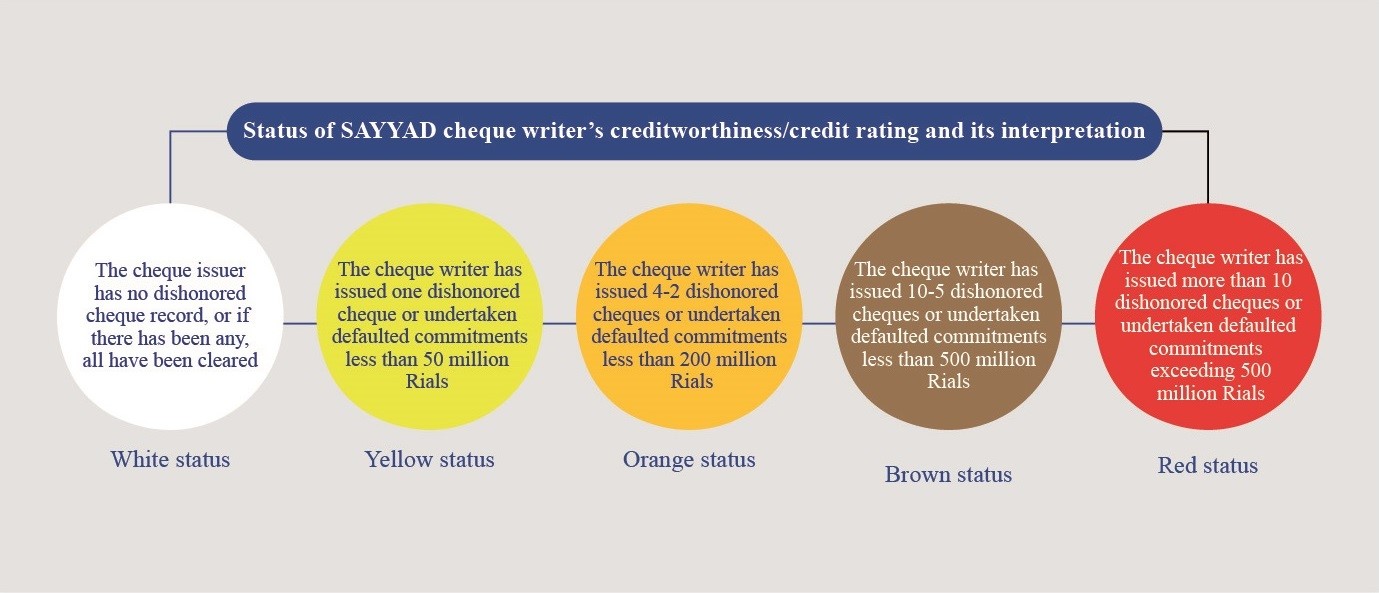
Making inquiry about the status of cheque writer’s creditworthiness/credit rating
It is possible to make inquiry about the status of cheque writer’s creditworthiness by entering the 16-digit code of Sayad cheques, visible on the cheque leaf, from the Sayad system. In addition to access tools to Sayad system, the service is also available on Central Bank’s website and through text messaging system number 4040701701.
The features of the new cheques
- The information registered on Sayad system shall be regarded reliable and acts as the benchmark for creditworthiness. In case of any divergence between the content of the cheque leaf and information on Sayad system, the bank will refuse to cash the cheque. If the cheque holder requests, the bank will issue the non-payment certificate.
- From the date of enforcement of the New cheque Act, the requirements and procedures of the Act shall not govern the cheques which are not registered on Sayad system, so such cheques shall be construed only as civil document confirming amounts owed to cheque holder.
- A cheque can be written as a guarantee for fulfillment of obligations but it can by no means be issued without a certain date on it.
Restrictions imposed on dishonored cheque writers
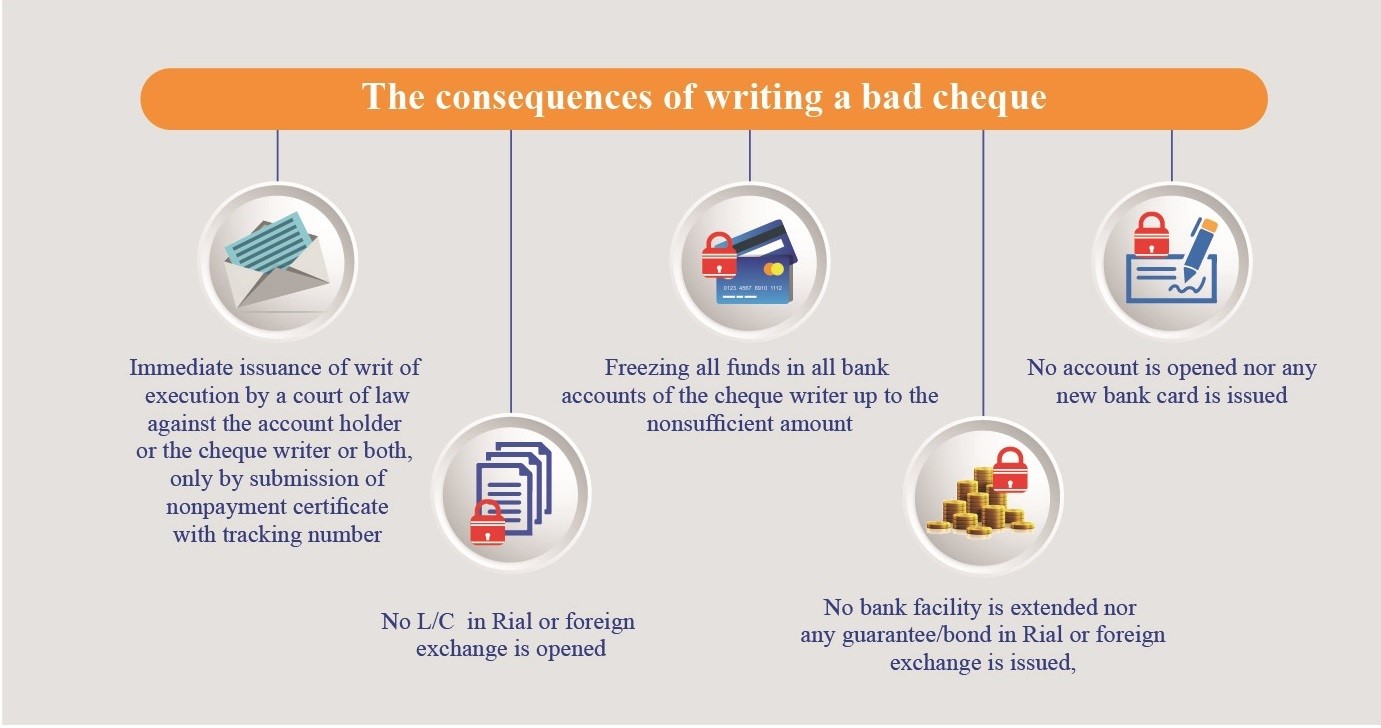
According to the New Act, 24 hours after registration of a cheque as non-payable or non-sufficient funds on CBI Integrated system, all banks and credit institutions, until the bad record of the rubber cheque is removed, place the following restrictions on the account holder and signatory of the dishonored cheque:
- No account is opened nor even any new bank card/credit card is issued/reissued, no micro facility is granted, nor expiry date is extended.
- The funds in any account or bank card as well as all the money belonging to the cheque issuer with any bank or credit institution, under any title, up to an amount covering the nonsufficient amount, as announced by the Central bank, are blocked,
- No bank facility is extended nor any guarantee/bond in Rial or foreign exchange is issued,
- No letter of credit, in Rial or foreign currency, is opened.

The procedure to eliminate the bad record of dishonored cheque
- The cheque writer must put sufficient money into his/her current account to cover the cheque amount and ask the bank to freeze it. In such case the bank is required to freeze such funds until the cheque holder cashes it, which will not exceed one full year, and inform the payee within three days in a safe, trustworthy and reliable manner.
- Submission of the cheque leaf to the bank,
- Providing the bank with the official letter of satisfaction of the payee (executed in a notary public) or official letter of state/non-government public legal person who is the payee of cheque,
- Submission a letter to the bank issued by competent judicial/registration authorities, indicating completion of execution operations of the cheque,
- Providing the bank with the official letter issued by judicial authorities indicating that the account holder is not in debt with regard to the cheque,
- Elapse of three years from the date of issuance of non-payment certificate, provided that no civil/ criminal case has been raised before courts or judicial authorities.
Following up and encashment/ collection of dishonored cheque
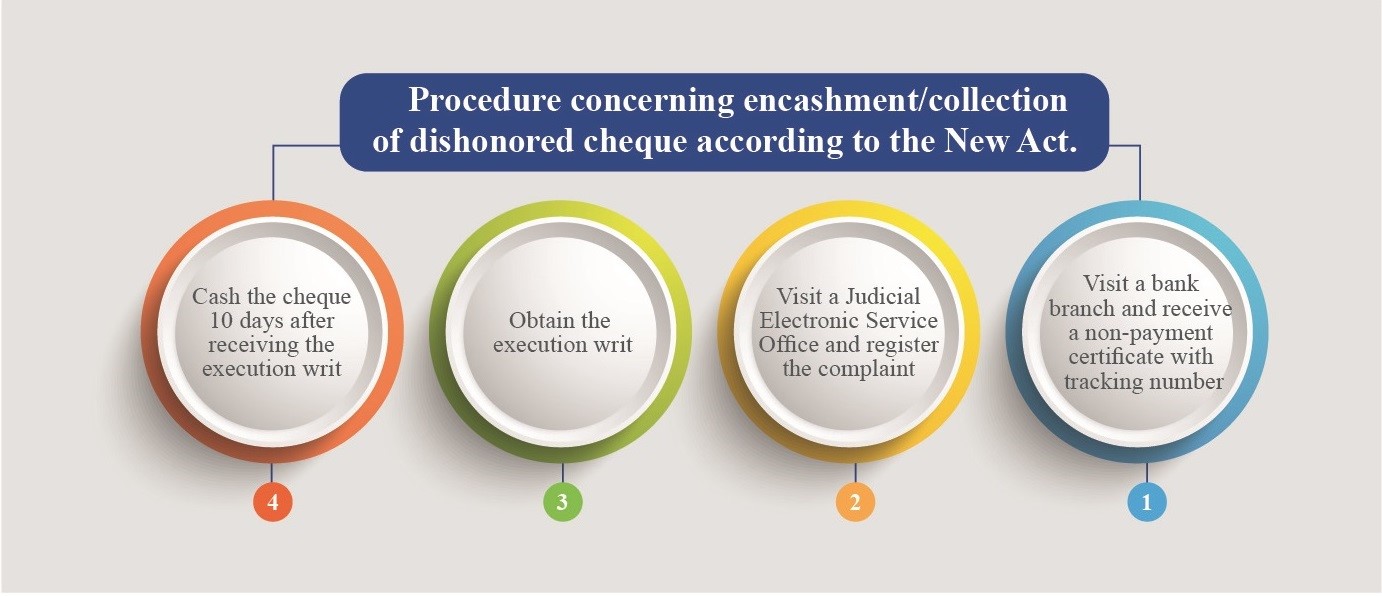
The follow up procedure of a bounced cheque is that the payee asks the bank for issuance of a non-payment certificate and instant registration of the information of the dishonored cheque on the integrated system of Central Bank. After that, he should visit a Judicial Electronic Service Office and register his case for proceeding. Then, the judge examines the case, complaint and evidence of the complaint in a short period of time and if there is no incompatibility between the evidence and the content of the New Act, issues the writ of execution. There is a ten-day time limit for the rubber cheque issuer, starting the date of issuance of execution writ, to sufficiently charge his account. Failing to do so, the “Procure Concerning Execution of Financial Sentences” Law is applied on the rubber cheque issuer.
Determining the status of existing cheques
- Registering the existing cheques on Sayad system is optional. Albeit, CBI, giving sufficient time to customers to avoid any problem, will gather the existing cheques and replace them with new ones.
- Using previous cheques is still acceptable, as it was.
- The previous cheques are processed as before and, so, can be issued to the order of bearer.